


 Español
 Français
 Deutsch
 русский
 عربى

-
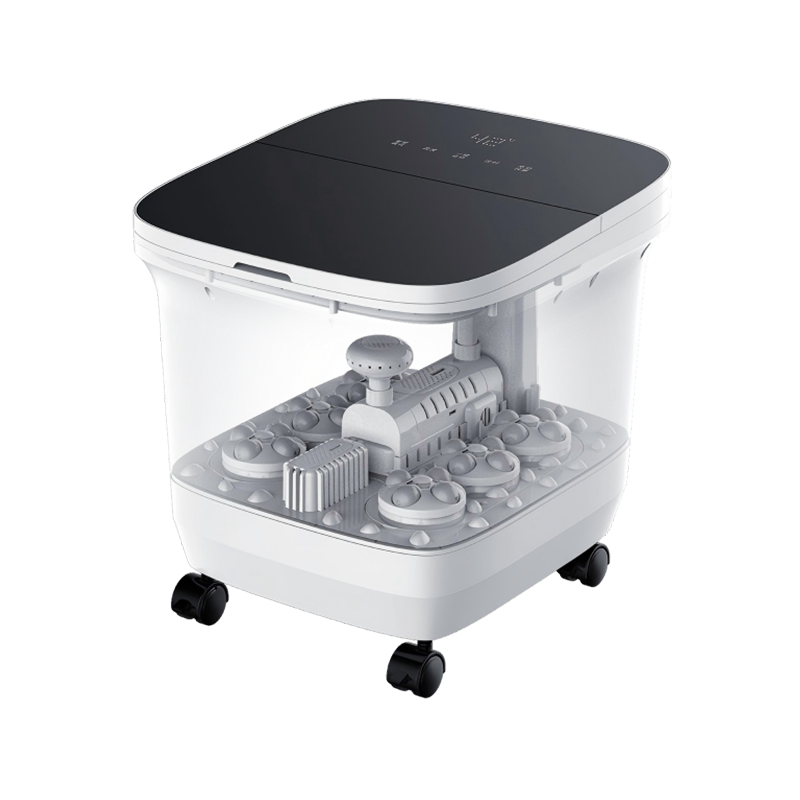 Touchscreen Large-Screen Water Circulation Foot Spa Bath Massager(GY-606C)
-
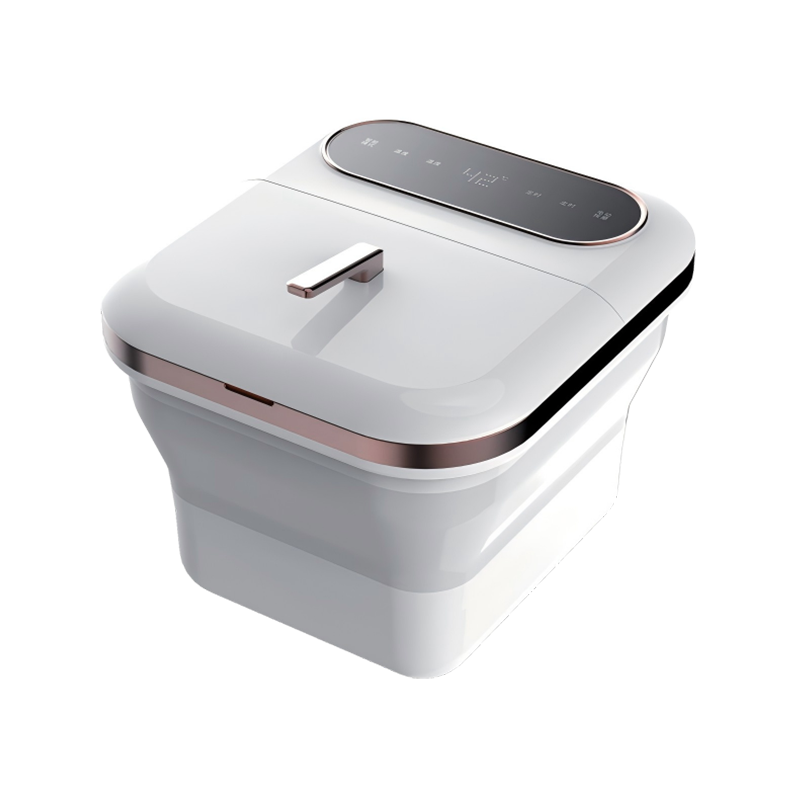 Minimalist Touch Water Circulation Foot Spa Bath Massager (GY-703D)
-
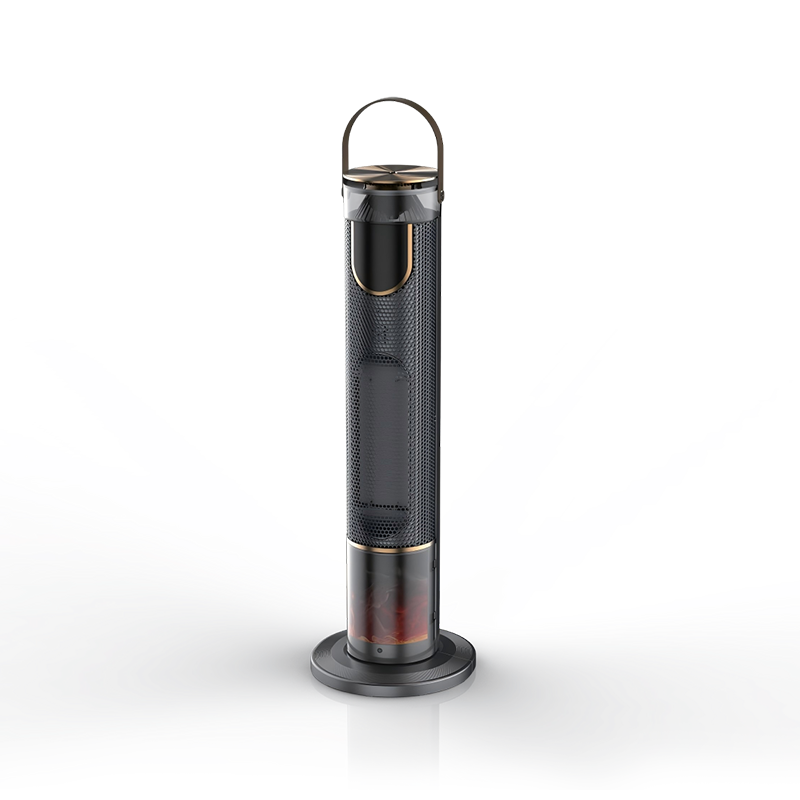 Intelligent Voice-Activated Atomizing Computer-Controlled Tower Heater(GY-QNS7701)
-
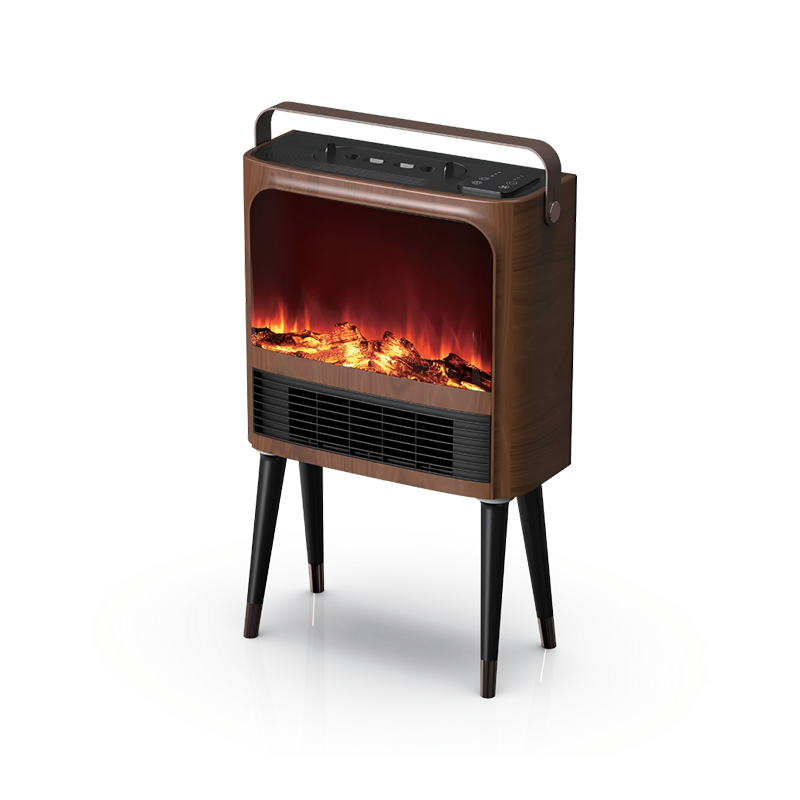 Intelligent Voice-Controlled Atomizing Electric Fireplace Heater(GY-BLS2201)

Guanyi operates an 18,000 m² production and warehousing facility with 250 employees, including over 20 technical professionals. Equipped with 10 advanced assembly lines, 22 large-tonnage injection molding machines, and comprehensive testing equipment, the company achieves a daily production capacity of 15,000 units, finished goods storage capacity of 300,000 units, and annual output exceeding 2 million units.
Since its establishment, Guanyi has remained committed to technological innovation. Through continuous R&D and market-driven product development, the company has created dozens of foot bath models and obtained more than 15 patents, including invention and utility model patents. With advanced products and a strict quality management system, Guanyi has established long-term OEM/ODM partnerships with multiple brands and earned strong recognition from customers worldwide.


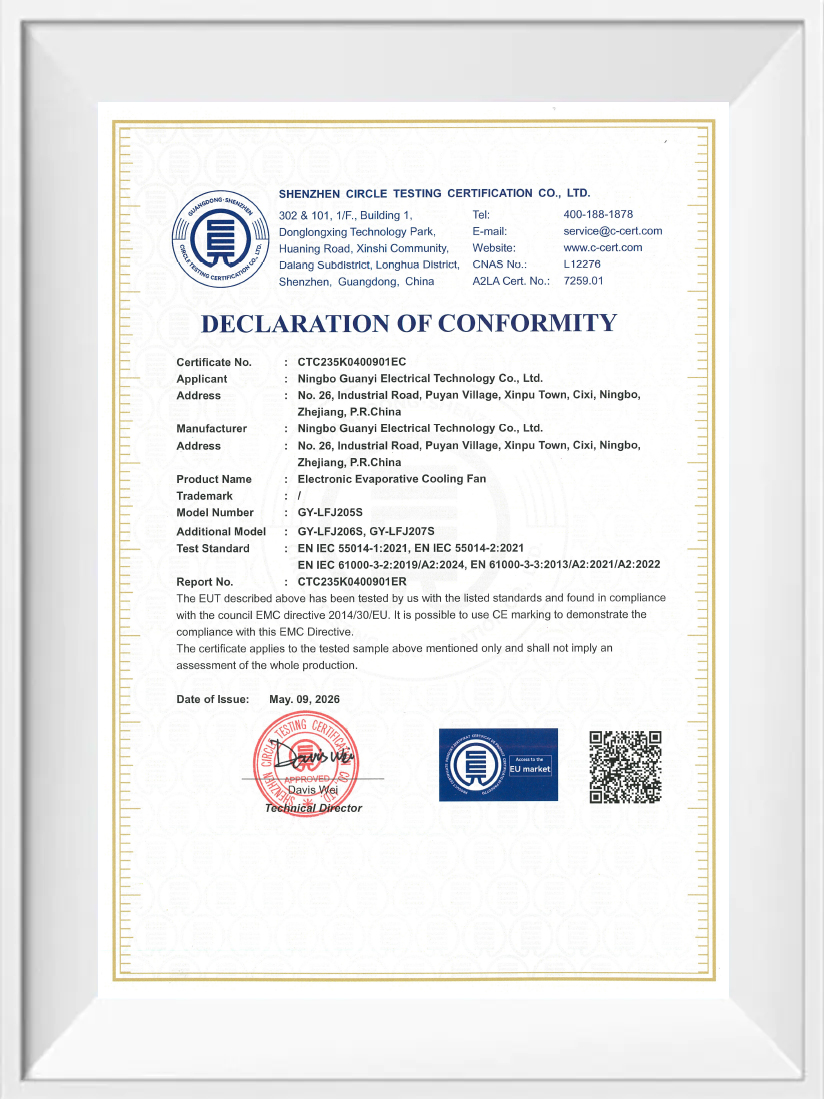
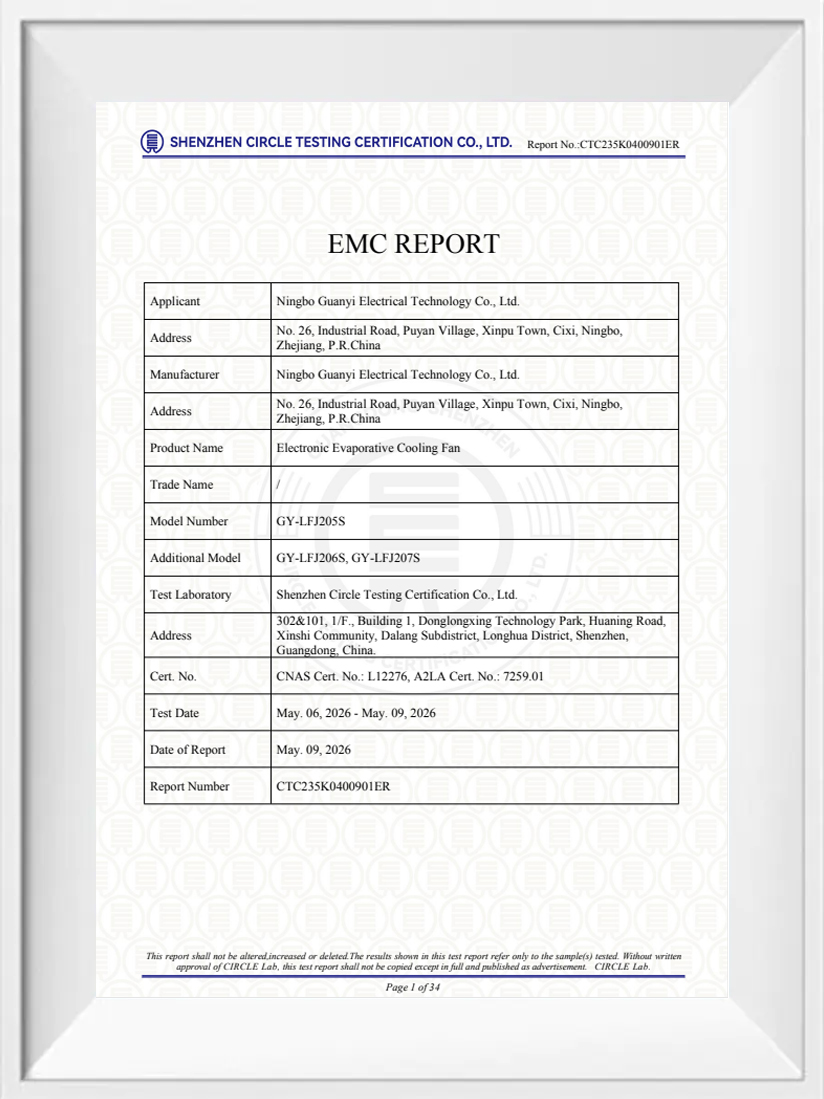

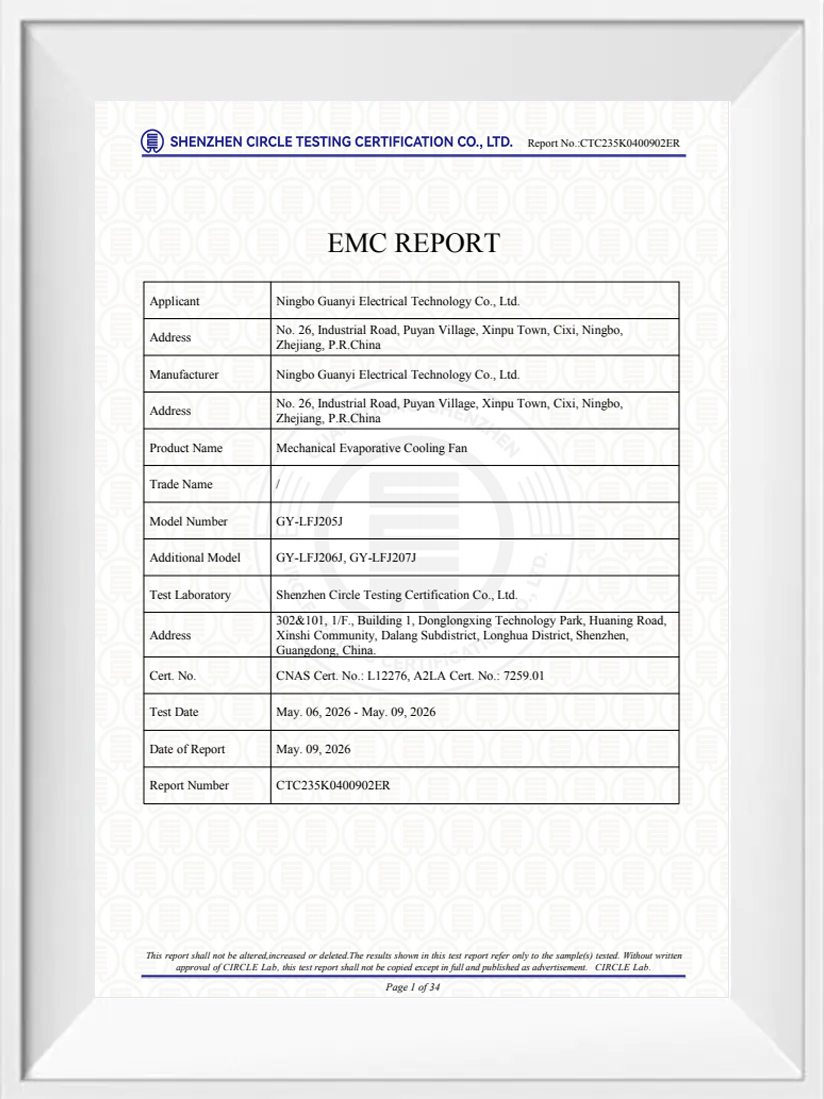
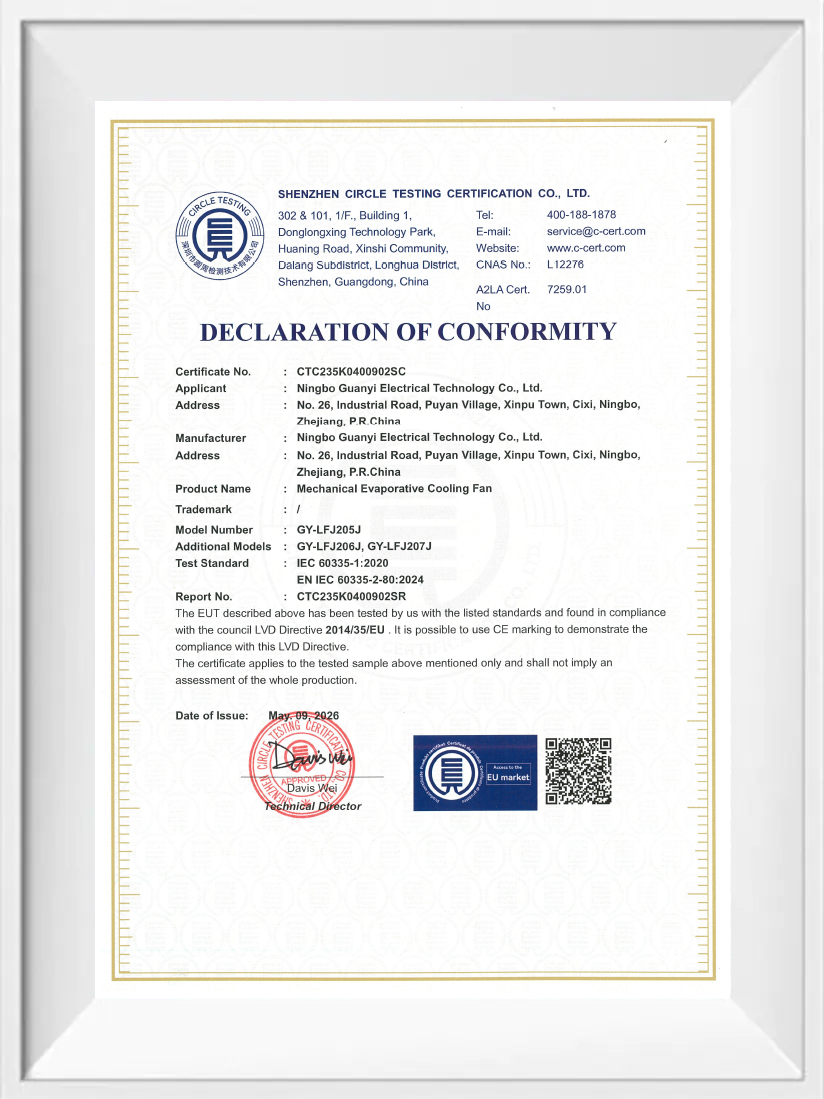

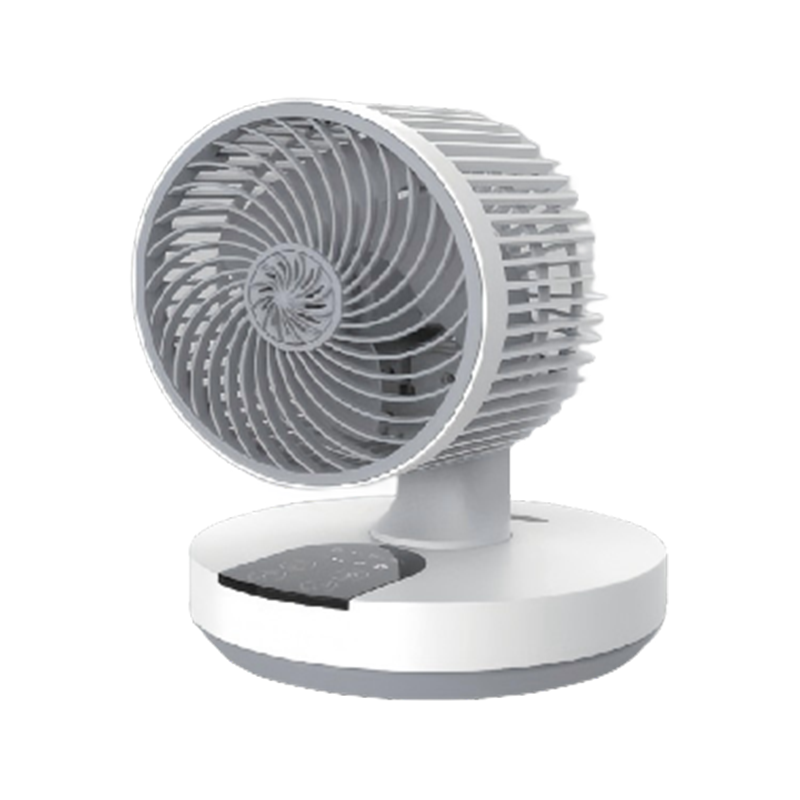
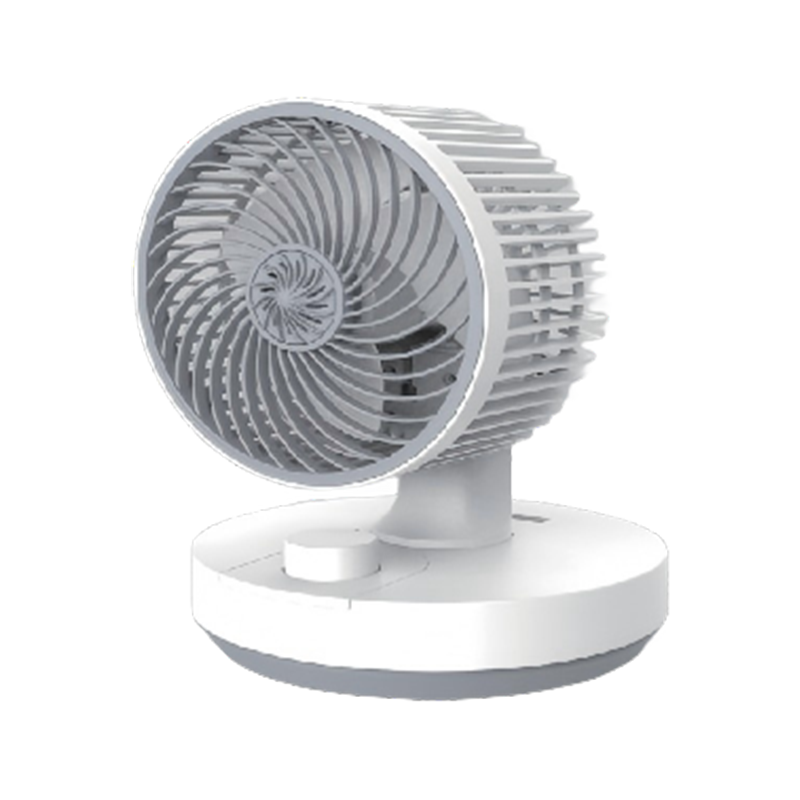
Ningbo Guanyi Electrical Technology Co., Ltd. is a Circulating Fan manufacturer based in Cixi City, Zhejiang Province, China, producing desktop and pedestal air circulators for OEM and ODM programs. Our range is built around DC inverter motors, 3D oscillation and multi-angle air delivery, with mechanical, touch and voice-control platforms sharing the same housing and assembly process. Importers, distributors and private-label brands place these fans in household comfort lines, air-conditioner assist sets and seasonal retail promotions.
Our Circulating Fan Range
Two families cover the floor space: compact desktop units for tables, counters and bedside use, and pedestal units that deliver air at seated and standing height in living rooms, offices and light commercial interiors. Both are produced on the same injection-molding and assembly base, so housing colour, control language and carton design can be coordinated across a shipment.
Desktop Air Circulator Fans
Tabletop models GY-K2 and GY-K3 hold the entry and mid positions of the desktop line: GY-K2 with a mechanical knob and three speed settings, GY-K3 with a touch fascia and three speeds. They suit bedside, desk, counter and shelf placement where a compact footprint and a narrow, directed air column matter more than wide-area coverage.
Desktop Air Circulator FansPedestal Air Circulator Fans
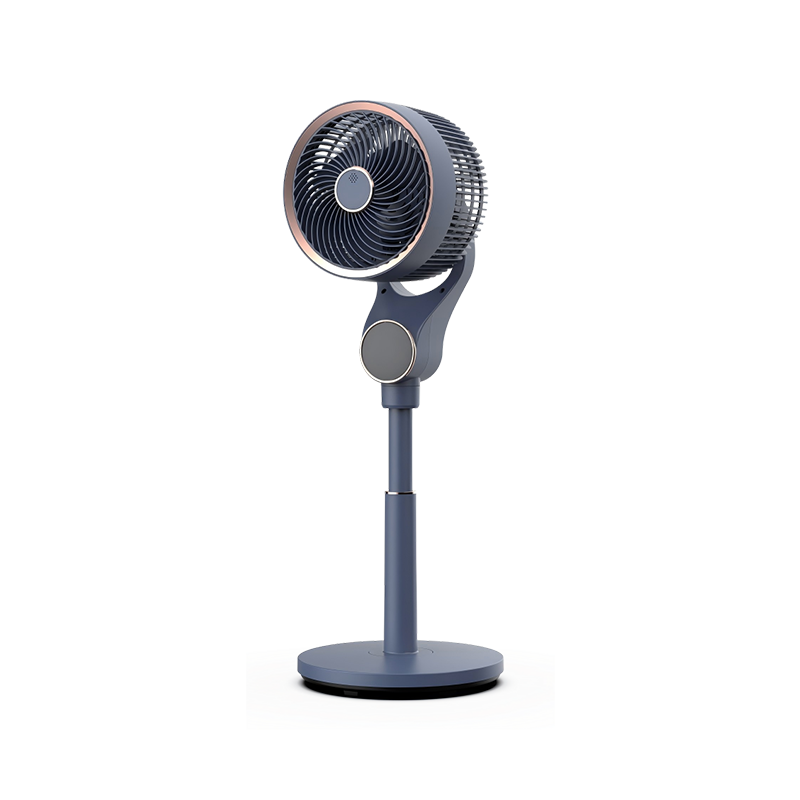
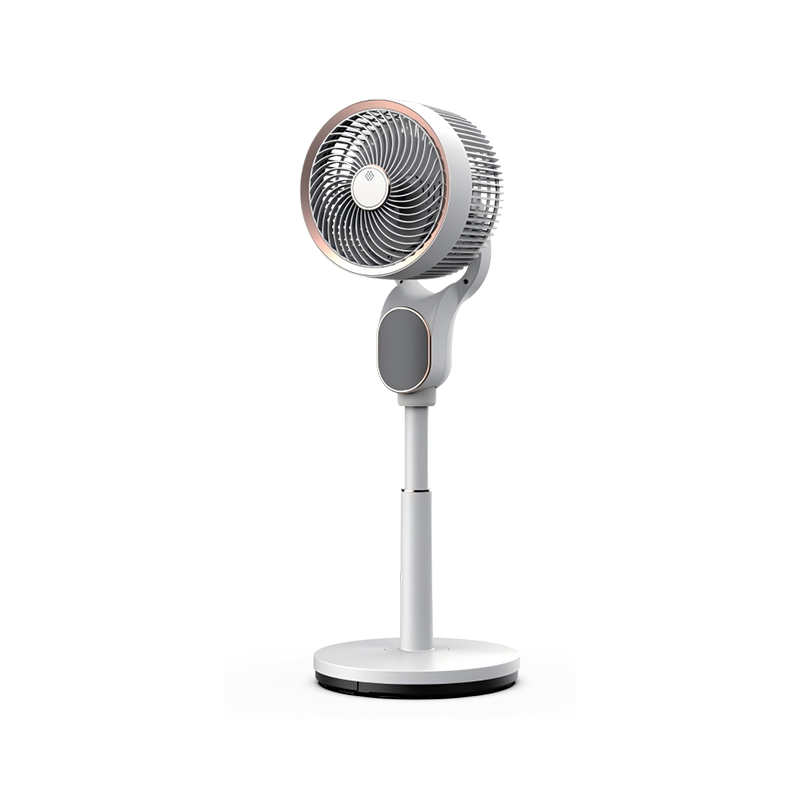
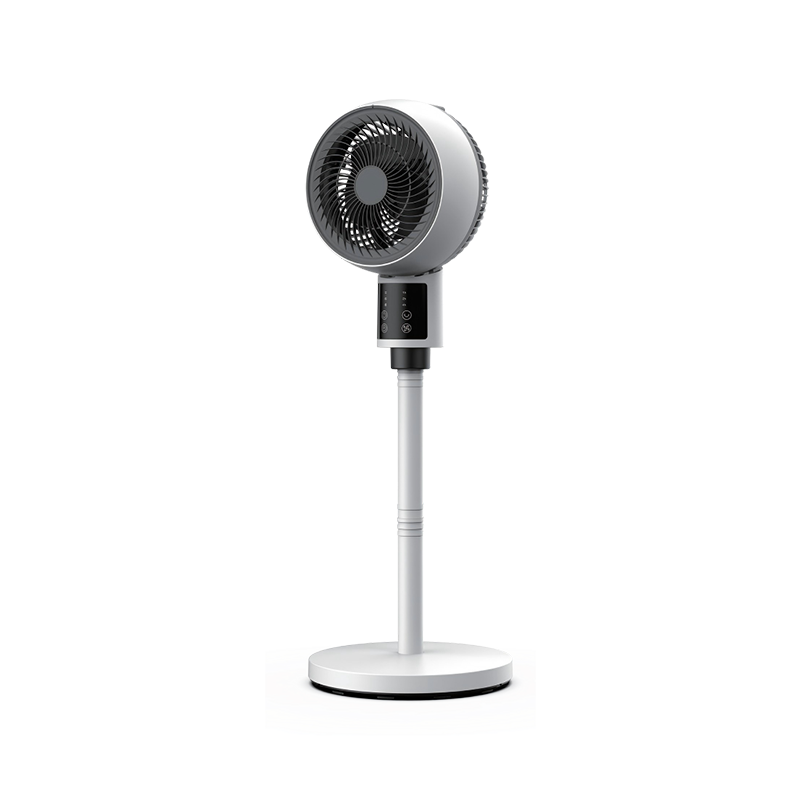
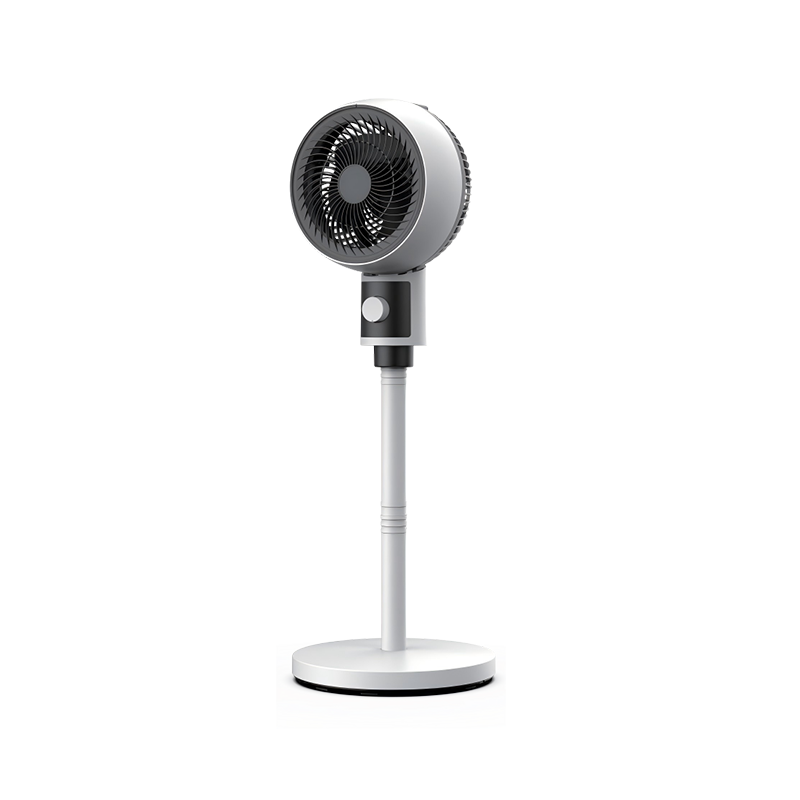
Floor-standing models span the widest part of the range, from the round-head GY-1101 and ball-head GY-108A to the GY-K1101, GY-K201, GY-K203, GY-K206, GY-K208 and GY-K1102 platforms with left-right, figure-eight and 3D oscillation. GY-205S and GY-205J add a honeycomb evaporative pad and water tank on a castor base for hot, dry rooms and semi-open spaces.
Pedestal Air Circulator Fans| Product family | Typical placement | Representative models | Specified for |
|---|---|---|---|
| Desktop air circulators | Desk, bedside table, counter, shelf | GY-K2, GY-K3 | Small footprint, three speed steps, mechanical or touch control |
| Pedestal air circulators | Living room, office, reception, shop floor | GY-1101, GY-108A, GY-K102, GY-K105, GY-K1101, GY-K201, GY-K203, GY-K206, GY-K208, GY-K1102 | Standing air height, left-right or figure-eight oscillation, panel or voice control |
| Pedestal air cooler fans | Hot, dry rooms and semi-open spaces | GY-205S (touch), GY-205J (mechanical) | Honeycomb evaporative pad, water tank, castor base |
Where Air Circulation Fits in the Room
A circulator is not a wide-spread table fan. The blade pitch and guard are shaped to push a focused column of air across the room, mixing warm and cool layers instead of stirring only the air directly in front of the user. That behaviour is what makes the product useful next to a split air conditioner, at the end of a long living room, or in a room with a high ceiling.
- Air-conditioner assist: a directed column carries cooled air away from the indoor unit so the set temperature is reached without a cold pocket around the outlet.
- Whole-room mixing: continuous oscillation keeps air moving through the occupied zone rather than along one wall.
- Spot comfort: desktop units used where a full pedestal would obstruct the space, such as bedside tables and work desks.
- Seasonal drying: moving air supports drying of floors, laundry areas and humid corners in shoulder seasons.
Control Platforms and Drive Options
Control type is the main price and market separator in a fan program, so most of our platforms exist in more than one control version on a shared housing. A retail customer can therefore open an entry SKU and a feature SKU from the same tooling and carton family.
| Control platform | Models | Operation | Typical program position |
|---|---|---|---|
| Mechanical knob | GY-K2, GY-K102, GY-K206 mechanical, GY-K1101 left-right oscillation, GY-205J | Rotary knob, three speed steps | Entry price points and markets where simple controls are preferred |
| LED touch / digital panel | GY-K3, GY-K105, GY-K1101 electronic version, GY-205S | Touch keys with display, speed and oscillation selection | Mid and upper shelves where a clean fascia sells the product |
| Smart voice control | GY-K201, GY-K203, GY-K206 voice, GY-K208 voice, GY-K1102 voice | Spoken commands plus panel or knob operation on the base platform | Feature-led launches and online listings with a clear differentiator |
Critical Specifications We Confirm Before Production
Each order is issued with a configuration sheet that fixes the working point and the electrical build, so tooling, electronics and packaging are set before the first unit is assembled. The points below are the ones that change the product most.
- Electrical build: rated voltage and frequency, plug type, cord length and cord exit position for the destination market.
- Air performance: blade diameter and guard geometry, speed steps, and the airflow and throw target at the intended working point.
- Oscillation: left-right arc, figure-eight or 3D pattern, and head tilt range for floor or ceiling-directed delivery.
- Drive and electronics: DC inverter motor or AC motor, control board version, and any negative-ion module on selected models.
- Acoustics: a noise target for the night or low step, agreed against the sample so the retail claim is repeatable in mass production.
- Structure and finish: housing material and colour, base weight, castor or fixed-foot configuration, and decorative trim.
- Presentation: nameplate and rating label content, language of the manual, master-carton quantity and shipping marks.
Materials, Safety and Compliance
Housings, guards, blades and bases are injection molded in-house on 22 high-tonnage machines, which keeps colour, wall thickness and fit consistent between production batches and lets us change a trim part without a new supply chain. The Cixi base covers 18,000 m² of production and warehousing and runs 10 assembly lines.
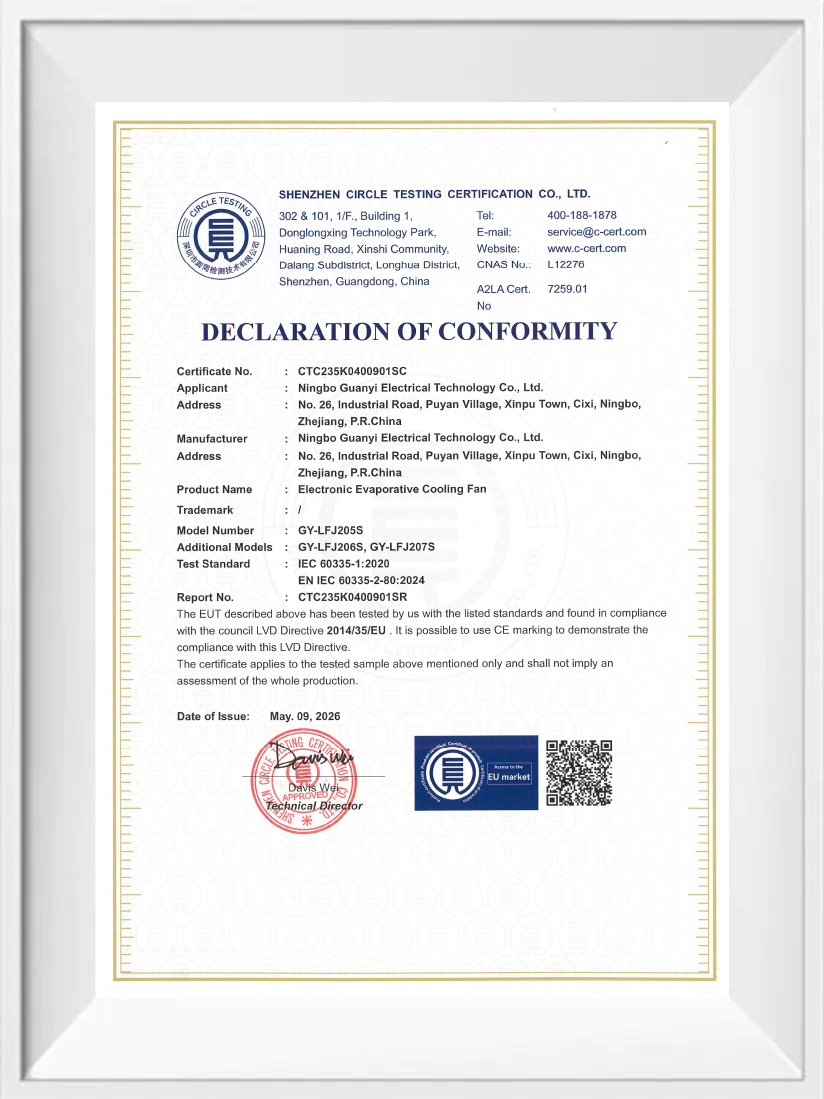
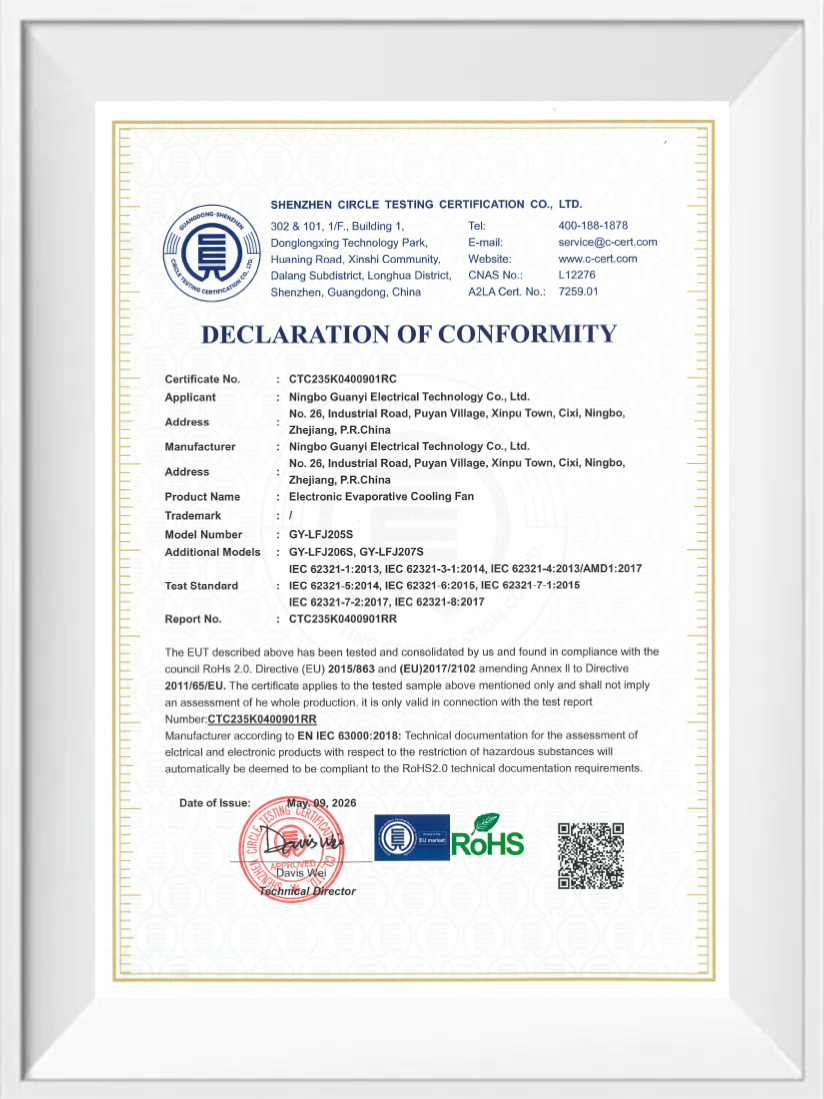
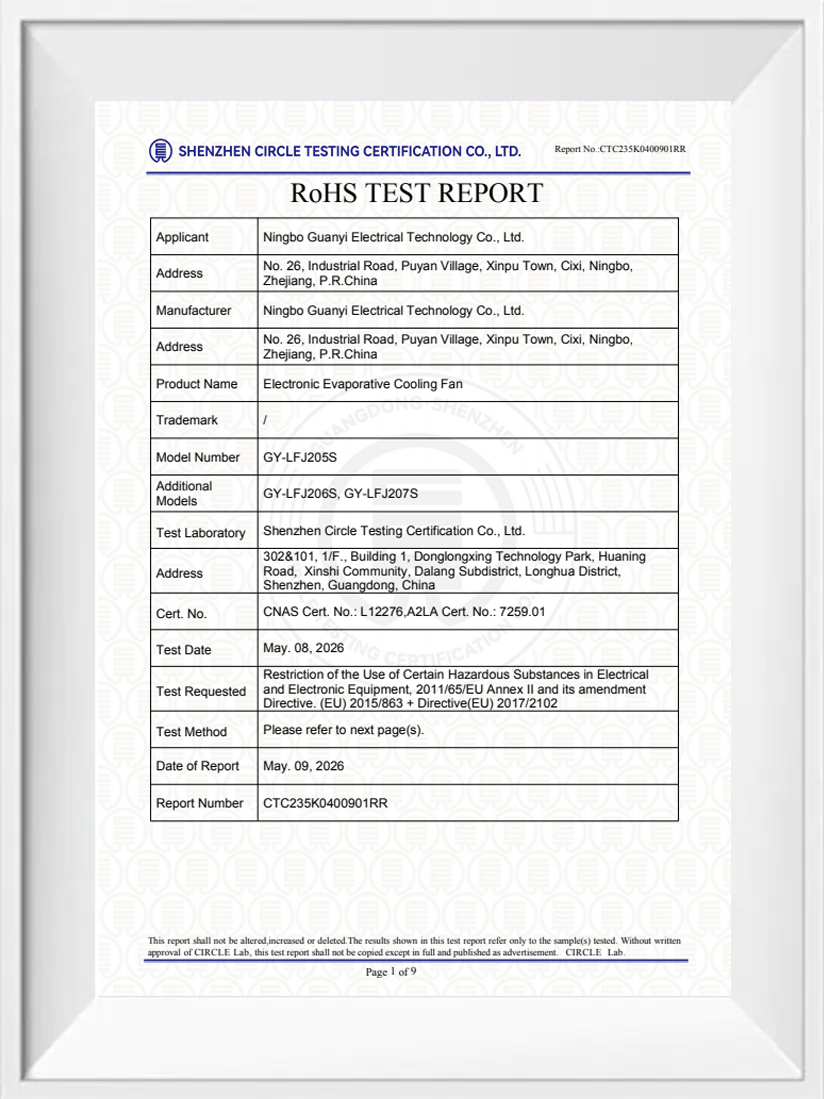
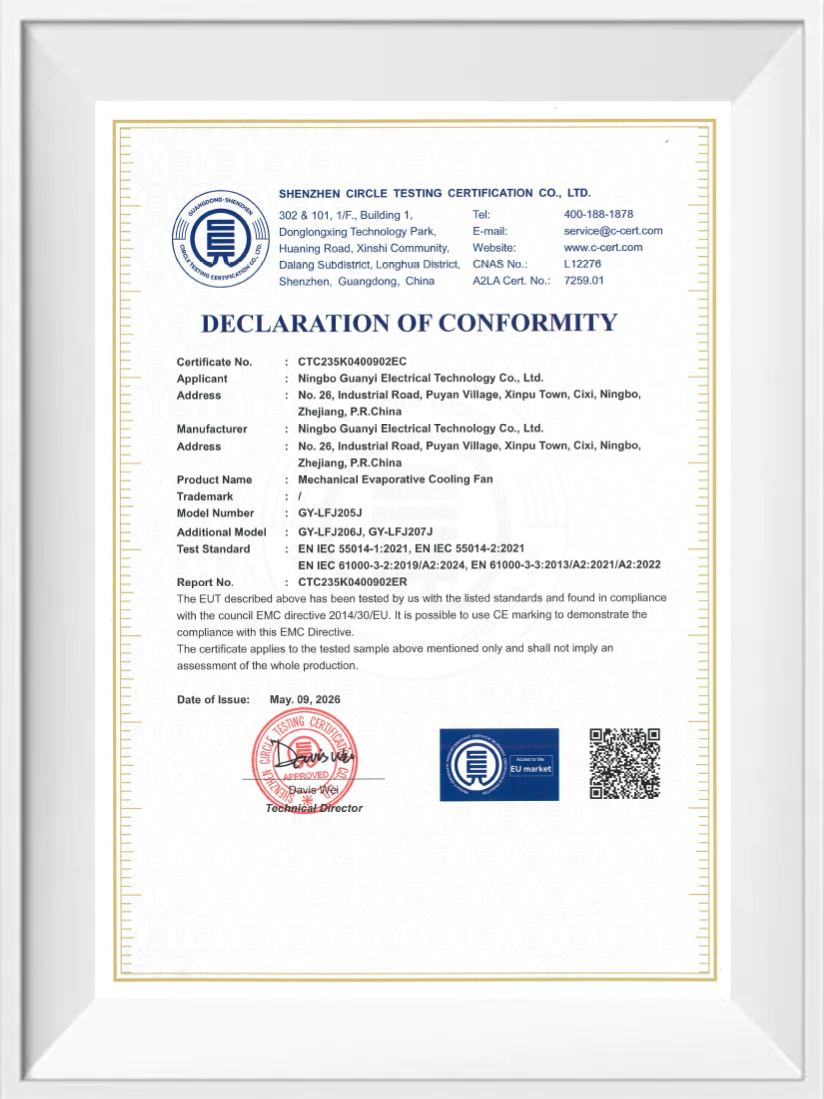
Safety decisions follow the destination market: guard spacing that keeps fingers away from the running blade, a base sized against the oscillation torque, motor thermal protection, and clearly marked controls and ratings. CCC, CE, RoHS and BSCI are within our certification scope, and the compliance file released with a program follows the route agreed for that market. Our engineering team includes more than 20 technical staff, and the company holds over 15 national patents covering structural and functional development.
Quality Control and Acceptance
Quality control is staged from incoming components to final packing, using the testing equipment installed at the base rather than relying on visual checks alone. For OEM programs we work to an approved sample, so the acceptance discussion is about a physical reference the factory and the customer both hold.
- Approved pre-production sample and retained reference unit for each SKU and colour.
- Incoming inspection of motors, boards, plugs and plastic parts against the configuration sheet.
- In-process checks on assembly, wiring, guard fit and oscillation travel.
- Electrical safety and function verification on the finished unit before packing.
- Final inspection against the agreed AQL plan, with photos and a report issued before shipment.
- Carton, master-carton and marking check against the approved packaging artwork.
OEM/ODM Development and Brand Packaging
We work from appearance and structural design through functional upgrades to custom brand packaging, which is how most circulating fan programs start with us. Long-term supply to more than ten well-known brands, including Konka and Royalstar, has shaped a workflow that expects strict standards on quality, delivery timing, compliance paperwork and confidentiality.
- Housing colour, trim and graphic changes within the existing platform tooling.
- Control platform selection, including knob, touch, digital and voice versions of one model.
- Blade, guard and oscillation changes for a different air-delivery behaviour.
- Private-label rating label, manual, colour box and master carton.
Information We Use to Configure Your Solution
A quotation becomes meaningful once the market, the model family and the control level are fixed. These are the inputs we ask for when a circulating fan program is opened.
| Input | What it determines |
|---|---|
| Destination market and certification route | Electrical components, marking, manual language and compliance file |
| Rated voltage, frequency and plug type | Motor and board selection, cord set and rating label |
| Model family, blade size and colour | Tooling, housing material, packaging dimensions |
| Control platform and oscillation pattern | Electronics, fascia, mechanical travel and price level |
| Airflow, throw and noise targets | Blade pitch, guard, motor speed map and sample approval |
| Branding, manuals and carton artwork | Printing, tooling for inserts, master-carton quantity |
| Order quantity, delivery schedule and sample needs | Line allocation, material purchasing and inspection planning |
Installation, Maintenance and Spare Parts
Pedestal models arrive as a column, base and head assembly that is fixed with the supplied fasteners; desktop models are ready to place out of the carton. Setup guidance covers base fixing, head tilt, oscillation engagement and cord routing, and the manual is issued in the language agreed for the market.
Routine care is limited to the guard, blade, water tank on the air cooler versions, and a check of the base and cord. The spare-part scope, replacement assemblies and service documentation are agreed at order stage so a distributor can support the product through its selling season.
Circulating Fan Program FAQs
How does a circulating fan differ from a standard household electric fan?
A circulator uses deeper blade pitch and a shaped guard to project a focused column of air over a longer distance, mixing the air in a room rather than spreading a wide, short airflow. Oscillation and figure-eight patterns sweep that column across the occupied zone.
Can one model be supplied with different control types?
Yes. GY-K1101 is available in a digital-control and a knob-control version, GY-K206 in mechanical and voice versions, and the desktop line pairs GY-K2 knob control with GY-K3 touch control. A retail program can therefore build two price points from one housing family.
Do you build for both 110–120V/60Hz and 220–240V/50Hz markets?
Voltage, frequency and plug type are fixed in the configuration sheet, and the motor, control board and cord set are selected for that build. Most export programs we quote fall into 110–120V/60Hz or 220–240V/50Hz, with the compliance route agreed for the destination.
How is a voice-control fan operated?
Voice versions such as GY-K201, GY-K203, GY-K206, GY-K208 and GY-K1102 accept spoken commands, and each of these platforms also exists in a knob or panel version. That lets a brand list a smart feature SKU next to a conventional one without changing the tooling.
What do you need in order to quote a circulating fan order?
The destination market and certification route, electrical build, model family or blade size, control platform, airflow and noise targets, branding and packaging requirements, and the quantity with delivery dates. With those points fixed we can return a configuration, a sample plan and a quotation that reflects the actual build.
- Email: [email protected]
- Whatsapp: +86 18969173008
- No.26 Industrial Road, Puyan Village, Xinpu Town, Cixi City, Zhejiang Province, P.R.China